
Hopes and Dreams supports people with dementia and their carers to rediscover and relive memories and their shared lives. While this could potentially helps slow progression of the disease, above all it promotes positive wellbeing and social inclusion. The project will
- Support carers of people with dementia to engage in positive activities with the people they care for.
- Provide people with dementia and their carers aids and resources to stimulate and prompt memory and connection familial relationships.
- Offer Peer support – building social connections with others living with dementia and those caring for them and developing resilience through mutual support.
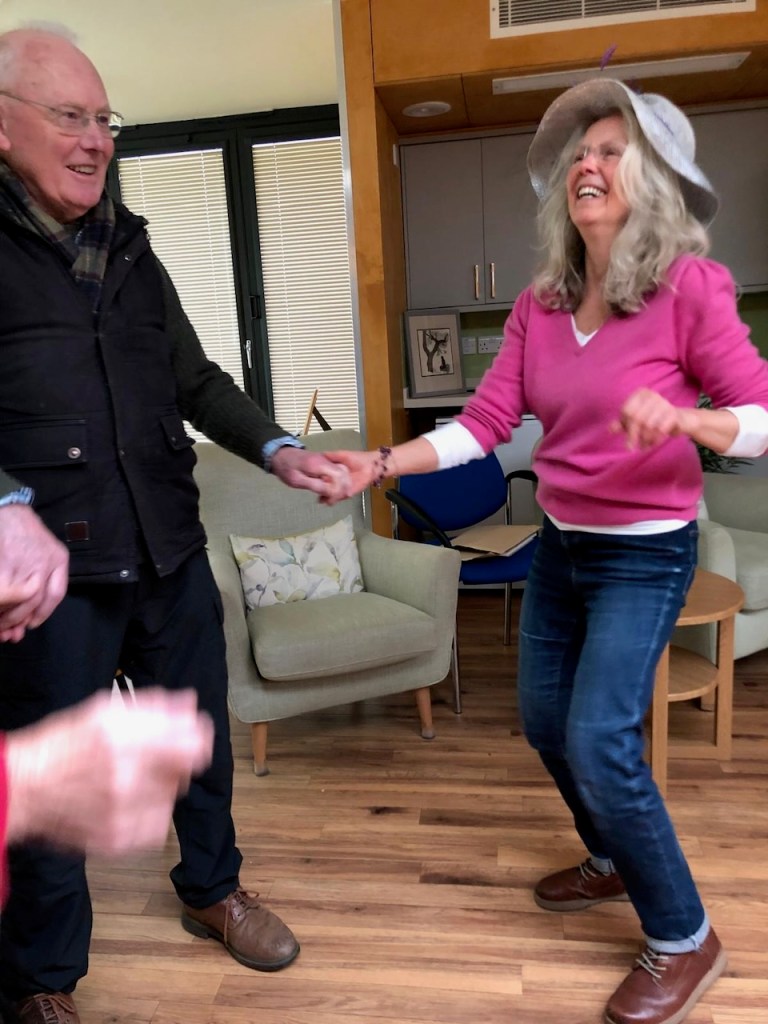
In 2022 we ran two ‘Hopes and Dreams’ reminiscence courses at the Pear Tree Centre over a period of 6 months. Each course ran for 8 sessions (weekly) of 3 hours for 16 participants (8 people with dementia and 8 carers).
Thanks to East Suffolk Council, East Suffolk Boost Grant Scheme, who have funded this project, through the organisation and administration of the Pear Tree.
OUTCOMES
- Working with 12 couples, total of 24 beneficiaries and their families. All of these couples lived locally, in all cases the partner is the sole carer. All couples described themselves as struggling and under supported
- As this was a new project it was important to monitor and evaluate each session as well as the project as a whole. We allocated one volunteer/facilitator as an observer to take notes for each session, and held an evaluation meeting at the end of each one. In addition we recorded each session with photographs and a blog. This had the added value of enabling us to put a record of each session onto our website, allowing participants to look back at what they had experienced.
Outcome 1 Promoting carer mental wellbeing and reducing risk of carer breakdown.
- Each project did provoke unexpected memories for both the carer and the person with dementia. Carers reported that the people with dementia retained memories of the session longer than usual, that they (the carers) learned new things about their partner as their memories were stimulated, and that the participants with dementia talked more than usual, and were more animated than usual during the sessions.
- The memory books and boxes are highly valued by the participants. The memories that were captured and recorded in the memory books and boxes are re-visited at home are now treasured family artefacts, and something for the couples to use and share. In some later stages they were taken with the person to the care home and provided stimulous for the care staff to use.
Outcomes 2 Reduced loneliness and social isolation and 3 Foster social connection and form of new friendships with peers through sharing of hopes and dreams and memories.
- These were clearly achieved. Working in small groups, mixing groups week after week, meant that all had a chance to meet each other and listen. Friendships were formed and acted upon. This was particularly successful for those participants who had been feeling isolated, so finding friends with the same issues living nearby was very much appreciated. Finding out about other activities for carers and people with dementia provided by charities also allows the couples access
Outcome 4 Prevent escalation of need – supporting people to live well in the community and reducing demand for formal service provision e.g., social care
While escalation of need in dementia is inevitable eventually, this outcome was achieved to some extent by the carers session that gave carers information about resources and activites that they had been unaware of.
Outcome 5 “I am not alone”
- Carers reported that they no longer felt alone and that making friends with other carers, and learning about other activites and resources available had affected their quality of life.
Conclusion
Hopes and Dream is a successful project that makes a real qualitative difference to people living with dementia in our local area. The particiants came from all walks of life, yet shared the denominator of dealing with dementia, and so felt equal, and trust built up quickly. They told us that they had feared ‘that it will be stressful for him’, that’ I may be bored’, that they were ‘nervous of being in a group of people with dementia’, that they feared ‘being judged’, and that it ‘may be too emotional’. But, they found that they felt ‘cared for and not judged’, that it was ‘good to meet people like me with dementia’, and that ‘It was entertaining and fun’ Each project ended with a day of celebration and evaluation. On this day carers and people with dementia paid tribute to each other and by evaluating the project were able to consolidate what they had leaned and achieved.
What the people said
What I liked
‘How I feel cared for and not judged’
‘I was impressed how everyone took part in all aspects.’
‘Each person who took part was someone I could feel an empathy with. I talked a lot more than I normally do.’
‘I liked the high number of volunteers and organisers in rela0on to par0cipa0on. Important for energy’
‘All sessions were skilfully organised so that the groups were small enough to enable those people to contribute.’
‘We have an album for our grandchildren’
‘It was entertaining and fun’
‘He liked being listened to’
‘The huge amount of props especially the cinema’
‘I was surprised how many creative people were with us’
‘Good to meet people like me with dementia’
‘I’m proud of putting together the album of memories and it wouldn’t have happened without this project’
‘Our children are so pleased with our book – they have a testament to our shared lives’.
‘I have since met up with R and will continue after this has finished.
What I remembered
‘How love is so important’
‘I learned things about G as he talked about his life that I did not know
‘J recalled aspects of her design career that I did not know’
‘I remembered the name of my teacher who taught me to knit
‘Remembering the radio at home, which I had forgotten’
What I Learned
‘I understood my older brother opting out of normal responisbilities years after he had a diagnoses if Alzheimer’s
‘I think G appreciates me a bit more as he had to reply on me to help him with his memories. Watching him par0cipate has helped me understand how confused he is
‘How different dementia is in every person who suffers from it.
‘my partners views on what makes for a long and happy marriage!
‘The importance of eyes in communications and particularly when physical movement has become stilted.
‘We learned about things available to careers and dementia people like All Hallows ‘I have since met up with R and will continue to after this is finished.
From tributes to each other
‘He let me follow my dreams
‘I loved L’s family, because I didn’t have one
She managed the money
She’s my soul mate
He talked to everyone, especially old people in he pub. We knew each other 3 weeks.
His generosity, brave and loyal
Her spirit of adventure She stood by me, patiently supporting. Its my turn now to love and care for you. Thank you L
He’s made an agreement with life, how to live your life. He’s never lost his temper.
2023
 Remembering yesterday caring today